

Geosynthetic liners are used in landfills, ponds, mining pads, and water containment systems to stop liquids from escaping into soil and groundwater. Because these liners are thin and flexible, performance depends on both material quality and installation workmanship.
A single hidden defect can become a long term leak path, so testing is treated as a core part of construction rather than an optional extra. The methods below verify that rolls, seams, and finished liners meet design intent before cover is placed.
Material and factory testing for geosynthetic liners
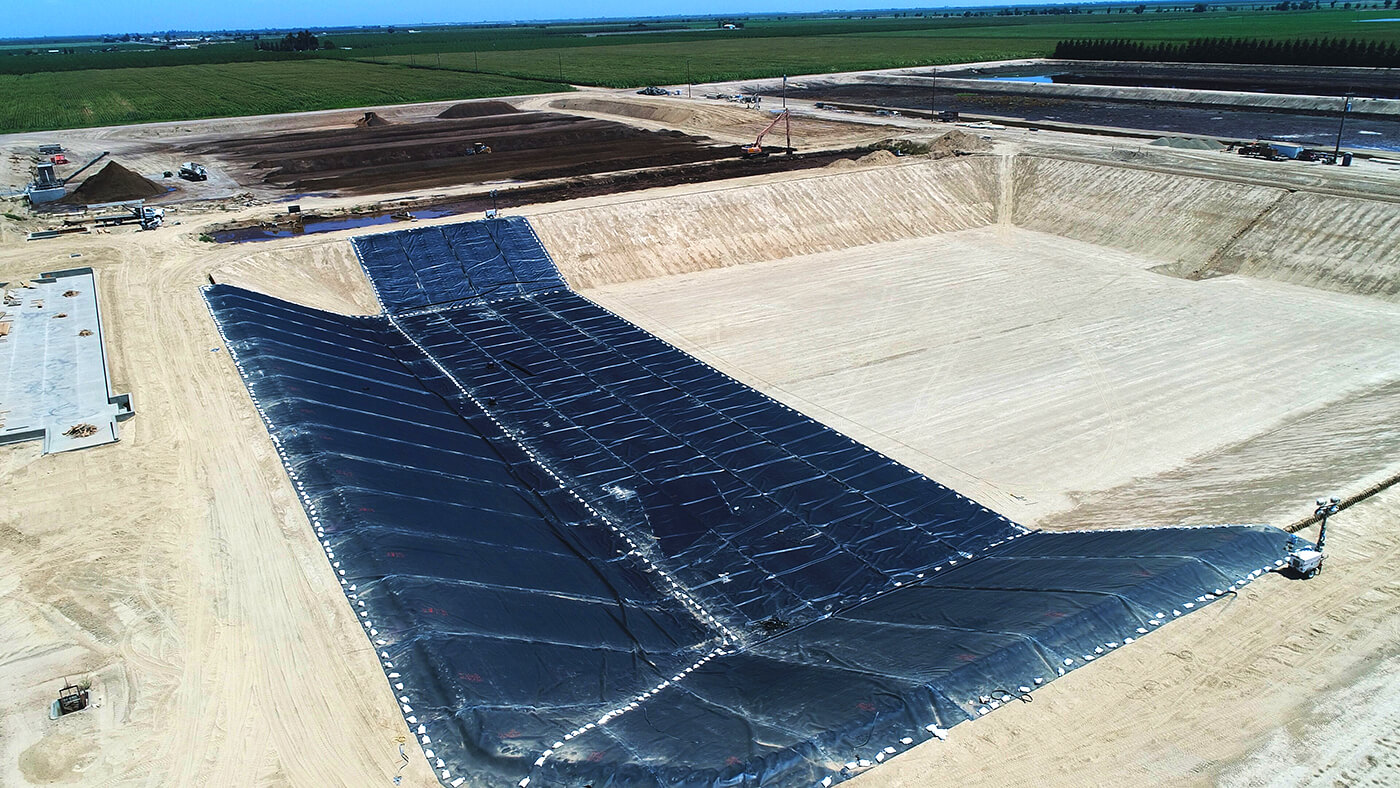
Testing starts at the factory, where each roll of geomembrane or geosynthetic clay liner is checked against the project specification. Common checks include thickness, density, tensile strength, elongation, tear resistance, and puncture resistance.
These properties confirm the liner can survive handling, placement, and long term loads from soil or waste. For HDPE or LLDPE geomembranes, durability tests may also cover carbon black content, oxidative induction time, and stress crack resistance.
GCLs are tested for bentonite mass per unit area, swell index, and internal shear strength so they seal properly when hydrated. Certificates and roll traceability link every installed panel back to its factory results.
Projects often re sample incoming rolls onsite to confirm the right product arrived undamaged. If you need the broader framework that ties these checks into acceptance rules and reporting, learn more about construction quality assurance to see how verification is usually organized.
Field seam testing and nondestructive verification

After panels are laid out, seams become the highest risk area. Every weld needs quick, consistent testing because seam defects are the most common source of leaks.
Nondestructive tests check tightness without cutting the seam. Air channel testing is used for dual track wedge welds by pressurizing the channel between tracks and watching for pressure loss.
Vacuum box testing is applied to extrusion welds and repairs by pulling a vacuum over soapy water and looking for bubbles. Spark or arc testing can also locate pinholes on dry liners, but it requires controlled voltage and trained operators.
All findings must be repaired and re tested before the next construction step continues. This real time loop prevents defects from being buried and forgotten.
Destructive sampling, integrity surveys, and final acceptance
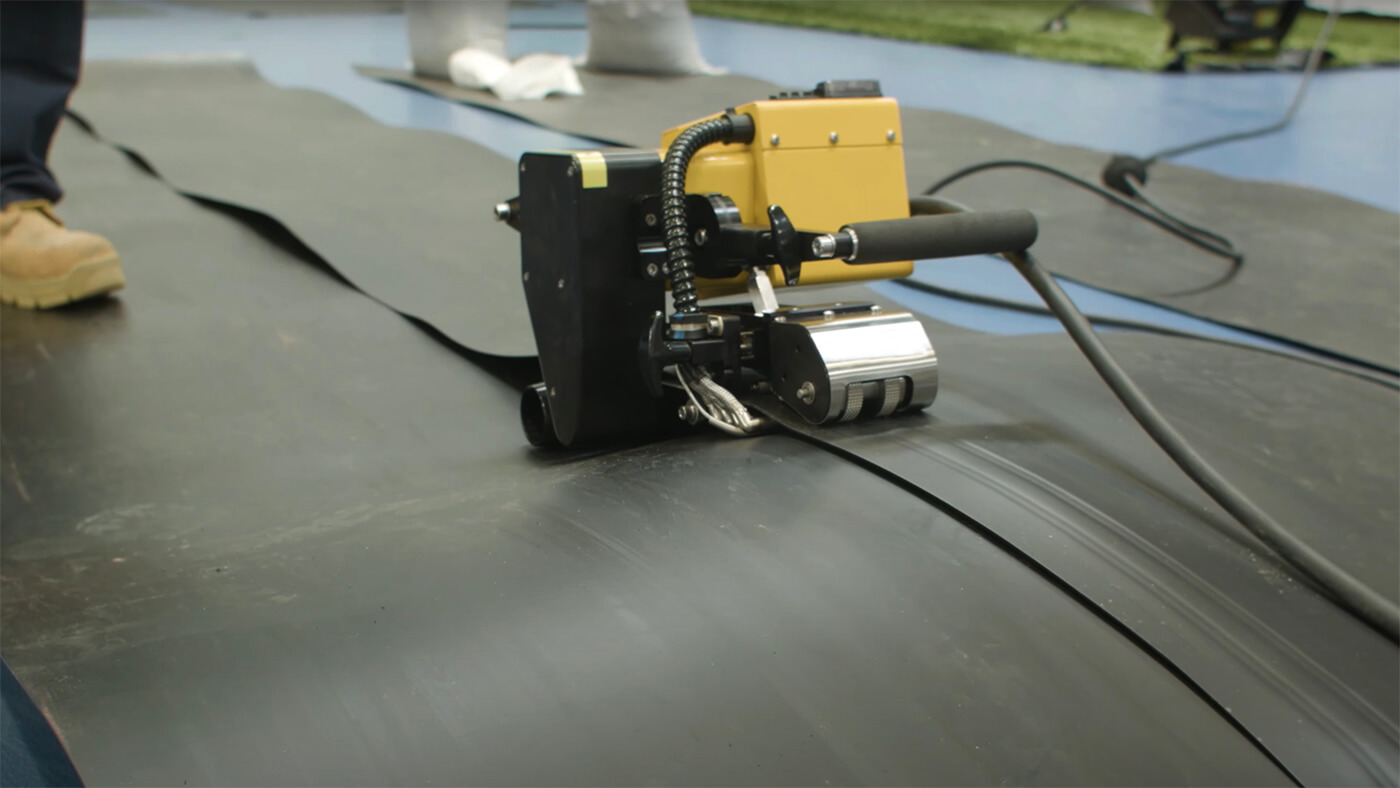
Destructive testing proves seam strength, not just leakage resistance. At specified intervals, small seam coupons are cut and tested for shear and peel strength onsite or in a lab.
Results confirm welding parameters were correct and that seams will resist long term stresses. If a sample fails, an investigation zone is defined, extra samples are taken, and the seam is repaired or replaced.
Many high consequence projects add an integrity survey after seam acceptance. Electrical leak detection creates a field over the liner and pinpoints any defect that allows current to pass through to a conductive layer below.
These surveys can find holes too small for visual inspection, giving extra confidence before burial. Final acceptance includes a walkdown to check for new damage and verification that penetrations, anchor trenches, and terminations match drawings.
The documentation package is then compiled with roll maps, seam logs, repair records, calibration certificates, and signed test reports. This becomes the compliance proof and a baseline for future maintenance.
Conclusion
Geosynthetic liner testing combines factory verification, disciplined field seam tests, and final integrity checks to prove containment performance. Planned early and executed consistently, these methods reduce leakage risk, rework cost, and long term environmental liability.


